Saturday, August 7, 2010

Day Eleven -- Up Close & Personal


National Bison Range
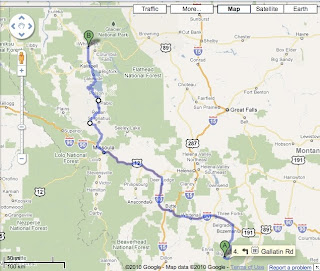
I couldn't get enough of viewing buffalo, so on the way to Whitefish, which is near Glacier National Park, the coincidental stop was the National Bison Range Wildlife Refuge. The range, established in 1908, is one of the oldest refuges and is home to 400 bison.
It was a nice break before moving on to Glacier National Park. Total mileage on the 11-hour trip was about 400 miles.

Friday, August 6, 2010

Day Ten


Yellowstone/Elks/Sylvan Pass/Bison


Third day into Yellowstone, and what a fun time the day was. Elk were grazing in a valley, which made it three wild animals (bison and chipmunks being the other two) I had seen with my very own eyes.

The goal was to travel on some of the other remaining routes of Yellowstone, the one past Old Faithful that would lead to the Continental Divide, to road to the eastern entrance eventually leading to Cody, and the northeastern path leading to Mammoth Springs and the northern gate. Mileage of the day totaled about 350 miles on a 13-hour journey.

The road along Yellowstone Lake provided a pretty view but unspectaculer. The road leading to Sylvan Pass on the eastern corridor was impressive, with an elevation of 8,559 feet. There was no time to take the scenic route to Cody, Wyoming, so I'll have to figure out a plan to travel that way on the return from Glacier National Park in northern Montana. The plan would be a return to Yellowstone en route to Grand Teton.

Backtracking from the eastern road and up toward Canyon, cars stopped along the road because a huge bison was traveling in the middle of the road. I got out to check out how far it was and it was slowing moving in my direction. Thirty feet, then twenty feet.

All I could think was "Damn, I have no comprehensive health care! I gotta save my own ass." So, I moved back into the car, snapping the camera away, as the buffalo passed by just 10 feet away and making its way back into the valley.

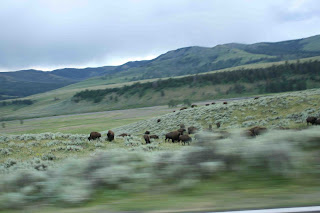
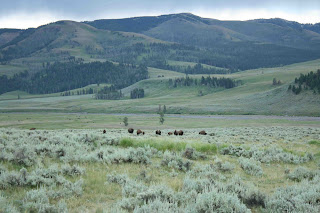
Farther along the valley a horde of bison gathered, and a few were on the opposite side of the road. It was an amazing sight to behold.

Another amazing sight was the drive back to the hotel, past Roosevelt's Arch in the northern entrance, and toward Paradise Valley, flanked by mountains of Gallatin National Forest. And as I drove westward, the sun was setting behind a mountain range -- slowly turning from an orange hue to a sharp red.

There's something to be said about sunsets -- each is different and every location is unique, be it from a mountaintop in Baguio, from the streets in Bangkok after a heavy rainstorm, from a fjord in Oslo or from the deck of Top of the Rock in midtown Manhattan.

Those views stay in your mind for a while. Sunrises, too, but those stories can be told another time.


Thursday, August 5, 2010

Day Nine


Yellowstone National Park/Mammoth Springs/Geysers/More Geysers/Old Faithful


Another productive 13-hour drive, this time around Yellowstone National Park. The journey from Big Sky, Montana to the park's northern entrance was more than 120 miles and took about two hours. I hesitated taking the western gate because of road construction near there. Mammoth Springs near the northern gate revealed a site out of the ordinary. Hot springs pouring out of white rock and the smell of sulfur revealed Yellowstone's true nature -- a supervolcano ready to explode. Apparently the last explosion of this area took place more than 600,000 years ago with a force 100 times greater than Mount Saint Helens in 1980 and is due for another one. Pretty much, if that were to occur anytime soon, this whole area's in trouble.

Moving inward there were plenty of geysers and hot springs, and by dusk, there was another spectacular sunset. At around 8:30 p.m. I got a two-for-one experience: Old Faithful and Beehive Geyser spewing water into the air for about 100 feet high at the same time.


Wednesday, August 4, 2010

Day Eight


Little Bighorn/Beartooth Pass/Yellowstone Park


I spent about 13 hours driving between Wyoming and Montana. Slept last night in Sheridan, Wyoming near Bighorn. The aim was to get as close as possible to Little Bighorn National Monument, which happens to be 70 miles north into Montana.

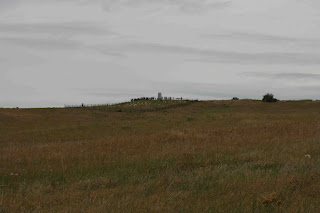
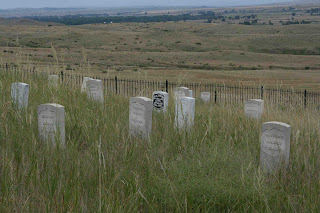
After Wounded Knee I was eager to visit Little Bighorn, which brought significant change in relations between American Indians and the federal government. Lt. Colonel George Armstrong Custer's defeat in June 1876 signaled a turning point in bringing American Indians to submission, pacification and dependency.

Little Bighorn's site was more elaborate than Wounded Knee's, which is located on a reservation near the Badlands in South Dakota. I asked a park ranger why there was no plans to develop the Wounded Knee site, and his response was that it was up to the American Indians to decide, and the subject was still raw enough for them that moving from the past seems difficult. Indeed it did feel that way with Richard, the American Indian I met at Wounded Knee two days ago. Maybe it will take time, but at least there's some progress. At Little Bighorn, a separate memorial was built more than a decade ago to recognize the American Indians who died in battle.

Little Bighorn had a trail that marked sites of historical significance such as key battles between the two sides. As a park ranger remarked, this site hasn't changed at all since the battle 134 years ago.

Montana's landscape is pretty much desolate, with the Great Plains still extending toward this area, the state's nickname appropriately is Big Sky. At the Mammoth Site in South Dakota, a guide mentioned that the region is North America's version of Africa's serengeti, which makes sense. The drive across Montana lasted a few hours, before returning southward toward Wyoming and Beartooth Pass, which has the highest elevated roadway in Yellowstone Park.

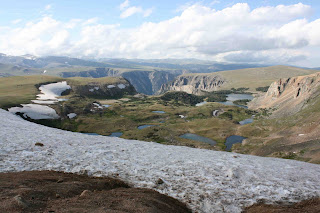
Some friends suggested traveling the road, and I wasn't disappointed. The winding road reminded me of the switchbacks of Mountain Province in northern Luzon. And reaching an elevation of almost 11,000 feet, I was amazed of the view -- glaciers, lakes, barren rock and lush vegetation. Traveling from the hot lowlands to a relatively cool 48 degrees Fahrenheit in a matter of hours is pretty spectacular. And yes, I did manage to walk toward a glacial spot and feel the coolness of that ice.

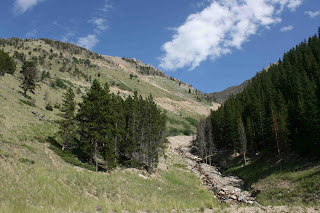
The road down took longer because of construction, but worth the trip. Moving into Yellowstone Park would also take a few hours to get to the hotel in Gallatin Gateway, where I am now, and with the sun setting, I was lucky enough to witness spectacular views of valleys and peaks.

A stretch of valley revealed herds of bison (aka buffalo), and it was my first time to view them, at relatively close range. Lots of firsts today, and it was a pretty good adventure. The road at sunset getting out of the park was also great -- got to see a geyser, streams, and more peaks and valleys. Life does have its ups and downs...

Tuesday, August 3, 2010

Day Seven

Devils Tower -- What can I say? It's pretty impressive to see a large piece of rock jut from the earth, almost as spectacular as the Badlands in South Dakota.
Wyoming is another new state for me. And I'm amazed by the landscape. Traveling from the lushness of the Black Hills to the arid landscape is pretty extreme. And it's still hot but dry.
Like South Dakota, where the speed limit on I-90 is 75 miles per hour, you can pretty much travel at 80 without fear of reprimand from backseat drivers or the state police.

Sunday, August 1, 2010

Day Six

South Dakota Air Force Musem/Mammoth Site/Wounded Knee/Badlands, Day Two --
I'll fast forward to visits of Wounded Knee and the Badlands.
I had set my GPS to Wounded Knee and it had pinged to the area without giving a specific site. But I had noticed a cemetery at the top of a hill and went to investigate, and it seemed ordinary. Driving toward the bottom of the road several persons waved at me to go their way, which I complied since I hadn't an idea of my surroundings.
I asked a gentleman named Richard where the battle of Wounded Knee took place, and he said "You're standing on it, man. It happened right here.'' He pointed to the cemetery yonder, which was the site of the mass graves. He said that the massacre of his people shall never be forgotten.
I politely asked him how I could get to the Badlands from here, and he pointed the road north -- remarking that the whole land is full of tragedy, of the conflict between the Native Americans and the settlers who tried to make their homesteads.
Indeed the grasslands and the Badlands seem like a less than ideal place to live. The eastern drive along Route 44 put me on the edge of the Badlands, and at 6:30 p.m., it was 93 degrees Fahrenheit. Traveling as the sole vehicle for miles in this place can be daunting. There's no cell phone coverage and an emergency pick-up would probably take hours.
Still, that drive for about 30 minutes was pretty amazing -- all I could think about was the extraordinary landscape. The jagged formations and the different colors of the the stratified rock will stay in my mind long after this trip is over.

Day Five

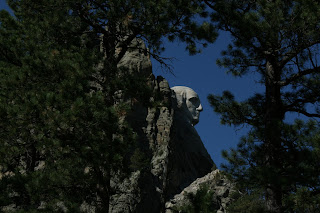
Mt. Rushmore/Crazy Horse